w3w3.com - Making Your Experience On the Web Enjoyable, Profitable and Safe!
2010
Unified Communication and Green Tech
924_ 11/8/10-
Larry sat down with co-chairs of the programming committee for Communications Technology Professionals (CTP), Tim Sisneros and Debora Langer and discussed the ever-changing and convergence of IP technologies. With their backgrounds and careers they had a great deal to share. Tim Sisneros works for Polycom a Silicon Valley based unified communication company providing both voice and video solutions to the market today. Tim is very heavily involved in the VoIP market in Denver. Tim explained both voice and video, hence the new term we're hearing unified communication, there's a lot more to it these days. Debora Langer is with Green Energy Corp, newly merged to include Magpie which is a company that has been around for about ten years. "Now we create software solutions for communications, the smart grid and the utilities." Debora said, "With our foundation in Bell Labs and our heritage in communications, it is a nice blend of what's happening in the smart grid industry. Larry asked them about the trends they're seeing. Debora replied, "Even with the down turned economy, Debora is seeing a resurgence in activity and buzz in the industry. As you go out to industry events there seems to be higher attendance, there's definitely more energy around this space and CTP in general attendance at our events have gone up. Professionally we're seeing more deals and projects be larger in volume, so it seems like that whole telecom industry is coming back. Tim added, "It's really a convergence of a lot of different technologies that are all becoming one. Where you used to hear a lot of discussions around people having jobs in the data field or jobs in the voice field or even software, they all kind of come together over the one thing that is common - IP technologies." Larry said, "How is CTP different than other organizations? You work with Silicon Flatirons, the Cable Center and various other organizations, how are you different and how do you compliment these other organizations?" Debora likes that CTP is so focused. It's specifically Colorado, it is specifically communications and technology and it is a very collaborative organization, and it has a very strong community feel. Tim noted that CTP is 100% non-profit organization. The connections that are made both personally and professionally are very rewarding - Tim and Debora were recently named in the Top 25 Sales People by Colorado BIZ Magazine. One of the things they talked about was how important it is to get involved and to give back - get on a board, get on a committee, just participate. Get yourself out there and make connections. Listen now...
.
Related Links:
Communications Technology Professionals (CTP) ||
Green Energy Corp ||
Polycom ||
CTP Channel ||
Keywords: Tim Sisneros, Debora Langer, Green Energy Corp, Polycom, Communications
Technology Professionals, IP Technologies, VoIP, Unified Communication, Smart Grid, Data Field - 11/8/10 bytes: 6380568 Listen to: Tim Sisneros & Debora Langer CTP
From MULTICAST to Video-anywhere UNICAST
908_ 10/11/10-
The program held at the Cable Center was called, 'From Broadcast (MULTICAST) to Video-anywhere (UNICAST)'. The Closing Keynote Address was Michael T. Fries, President and Chief Executive Officer, Liberty Global, Inc. And isn't technology great, especially when you're giving the closing keynote address at a high powered industry conference and the A/V equipment decides to be difficult. Well it was good for us, We got an impromptu delivery from our local global seer. He was funny, direct, poignant and just plain fun. Giving us a view of who Liberty Global is; How they fit in Malone's eco system; Their business in Europe; What's driving their business and Mike put it, "the meat of it, Liberty's view as to how they see this industry evolving... In particular television and Liberty Global's role in television space - the whole down pipe theory. Couple of facts many of you may not know: Liberty Global is the second largest operator in the business today, after Comcast. We've been in this business for 20 years, I (Mike) was the fifth employee back in 1990. We had $20 million and the vague notion that people outside of the U.S. might actually want to watch CNN and MTV and stuff like that. That's pretty much how we got started. Over that period, our industry has reinvented itself, and we had something to do with that. We were one of the first companies on the planet to launch voice and data services over video network. We actually coined the phrase 'triple play' back in 1997; we were taking our European subsidiary public, in the good old days, as you'll remember. Michael also pointed out, "We're helping people fall back in love with television. There's a lot to be proud of in this industry and it's our opinion with this kind of initiative that we can actually get to the point where consumers love us." He also shared some interesting and some startling information about 'From Broadcast (MULTICAST) to Video-anywhere (UNICAST)'. It's information that is interesting to us at a personal level and has a great impact on business as a whole. There's much more...
Related Links:
Liberty Global ||
Silicon Flatirons ||
Communication Technology Professionals ||
Cable Center ||
CTP Channel ||
Keywords: Mike Fries, Liberty Global, Silicon Flatirons, Communications Technology
Professionals, Cable Center, From Broadcast (MULTICAST) to Video-Anywhere (UNICAST), John Malone - 10/11/10 bytes: 20512394
Listen to: Mike Fries, President & CEO, Liberty Global
846_ 5/24/10 - Transformation in the telecommunication industry "The landscape in the telecommunications world is changing so rapidly that it's often difficult to keep up with it." Larry sat down with Jeffrey Pearl and John Scarborough, cofounders of IP 5280, VOIP Specialists. John went onto explain, "The traditional telephone companies are really changing primarily because of two key drivers. One is the change of technology and the second is the change in the cost of infrastructure, of running those types of traditional networks. Jeffrey and I have been in the industry for 20 years, we grew up in these traditional telecommunication networks. It's incredible how much, literally billions and billions of dollars to build these networks out over the last several decades. The reality is though, technology has brought on board so much new capability. Now, most recently the ability for voice transmission to be processed over the Internet..." Jeffery said, "People have been messing around with VOIP for a long time, it was peer to peer on a laptop where they were calling someone overseas for free. It has evolved into a real fun service that people use out of their homes, people use for business. I think the biggest changes really are the high definition voice, just like high definition TV. When you run our phones and our service next to a traditional phone line, there's a huge difference, a huge difference, it's jaw dropping. You've actually got to hear that. We go out and plug in, do test calls and our customers are amazed. the big mover right now is video. We call it the Jetson phone, like the old cartoon. You're going to be talking to a person and looking at them on the video screen - we have that service today." ...Listen for more... Related Links: IP 5280 || Communications Technology Professionals || CTP Channel || Communications Exec of Year & Ascent Awards Dinner Photos || Keywords: Jeffrey Pearl, John Scarborough, IP 5280, VOIP, Telecommunication,
Cellular Networks, Phones, High Definition, Video, IP Services, Cloud 5/24/10 Chnl: CTP bytes: 8020012 LISTEN to Jeff Pearl, John Scarbough-IP5280
Digital Hygiene: Critical in today's environment 800_3/1/10 - At the Digital Broadband Migration 2010 Conference: Examining the Internet's Ecosystem, Larry interviewed Michael Powell Former Chairman, Federal Communications Commission, Sr. Advisor, Providence Equity. Michael participated in many ways including being on a panel that offered varied controversial discussion points on The Internet Ecosystem in Perspective. Looking back at his days with the FCC, Michael Powell says he is blessed. He always told everyone that he had a front seat at the revolution. Everything we increasingly take for granted today, the rise of the Internet. Michael was at the FCC in the late 90's, early 2000, the Internet had only been commercial a handful of years. The ecstatic way we talked about it was really melodramatic, but no one fully appreciated the transformational nature of it. Michael talks about some specific lessons shared by his father, Colin Powell, an American statesman and a retired four-star general in the United States Army. Listen there are some great points. During his panel discussion, Michael mentioned, "digital hygiene". Larry asked him to explain what he meant. "It comes from being a parent and from having an appreciable understanding of how powerful technology is in the lives of our children. Their world is permanently interactive, it's anytime anywhere and it's very pervasive. But at the same time it's a world in which they can put much at risk in terms of their own privacy, their own behavior, we read these stories everyday where kids are getting in trouble doing things inappropriately whether texting or accidents they have using technology while driving a car." Michael offers some specific advice for parents, teachers, in fact all adults. Listen... Related Links: Providence Equity || Silicon Flatirons Program || SF Home || CTP Channel || Event photos link || Keywords: Michael Powell, Digital Broadband Migration, Silicon Flatirons, Internet's
Ecosystem,CTP, Digital Hygiene, Interactive, Colin Powell >> bytes: 5916006 Chnl: CTP LISTEN to Michael Powell, Former Chairman of the FCC
810_ 3/22/10 - Cell phone: It's really a little computer The Communications Technology Professionals organization (CTP) is doing something new. For the first time this year, they are presenting the Ascent Award, honoring and recognizing an emerging new kind of company in Colorado. "It's called the Ascent award because we want to identify a company that's bringing something new to the communications industry, that's changing how we look at technology and communications in Colorado, that's a Colorado based company with a strong base in Colorado - and we have three finalists - we'll be announcing the winner on that award evening of April 8th", said Stephanie Burnham, Vice President of CTP. Dave Gilbert, Chief Executive Officer and Founder of SimpleSignal is one of the finalists. Simple Signal puts together business telephone systems that change the way businesses do business and the way in which they interact with their communications overall. Dave said, "UC, Unified Communications as a Service works differently than maybe what people are used to in terms of communications being delivered to them over the wires. So, SaaS in general comes from software as a service - the way that works, instead of buying shrink wrapped software and plugging it into your computer, somebody has built the technology and then hosts that in a data center where many, many people can access it from anywhere, anytime." There's much more... Related Links: SimpleSignal || Communications Exec of Year & Ascent Awards Dinner || Communications Technology Professionals || CTP Channel || Keywords: Dave Gilbert, SimpleSignal, Communications Technology Professionals, CTP,
Stephanie Burnham, Ascent Award, Unified Communications as a Service - bytes: 6797482 Chnl: CTP LISTEN to Dave Gilbert, Ascent Nominee
784_ Future of the broadband stimulus program 2/1/2010 The future of rural broadband, opinions on broadband stimulus program, including the new “satellite project” fund, and satellite services industry in Colorado was the focus of an interview with Lisa Scalpone Vice President and General Counsel for WildBlue Communications, now a ViaSat company. Larry went onto explore what’s new and different in next 18 months for satellite broadband. Lisa oversees the legal and government affairs for WildBlue, a Colorado-based satellite broadband provider. Prior to her position as General Counsel, she held other functional positions within the company, including VP of Business Development. She was responsible for handling the company’s stimulus applications under the Recovery and Reinvestment Act. Larry also asked, "What changes do you expect as a result of WildBlue’s merger with ViaSat? What is the roadmap for satellite broadband? How does it keep up with wireline? What are the biggest challenges in serving rural America? Listen to this interview and you'll have a better understanding of what issues face us in getting broadband to rural US and what economic impact satellite broadband has on both local and national economies. Did you know that Colorado continues to lead the nation in communications innovation, especially in Broadband? Lisa is on a high-profile panel at the Broadband Now - the Future of Communications program on February 3, 2010 hosted by the Communications Technology Professionals. The future of communications is dependent on the evolution and availability of broadband. You'll hear what industry experts are saying about latest trends in broadband, see exciting applications only made possible through broadband proliferation, and weigh in on where the broadband evolution will lead the communications industry. Related Links: WildBlue Communications || Future of Communications || Communications Technology Professionals || ViaSat || CTP Channel and Archives || Keywords: Lisa Scalpone, WildBlue Communications, Satellite Broadband, Stimulus
Program, ViaSat, Communications Technology Professionals, > Channel: CTP 6839633 bytes - 2/1/10 LISTEN to Lisa Scalpone, WildBlue Communications
781_ Broadband and the future of communications 2/1/2010 The Statewide Internet Portal Authority (SIPA) serves as the oversight body of the Colorado.gov portal. The Colorado.gov portal is the gateway to Colorado government, and it is intended to be Colorado's single most comprehensive delivery channel for eGovernment services. John Conley, executive director of SIPA was interviewed by Larry to specifically address the issue of broadband in Colorado. John said, "The federal government and specifically the FCC and the NTIA have started to play a large role in wanting the nation to deploy more broadband throughout the rural and even into the metropolitan areas. In February of 2009, about a year ago, they released through what is commonly referred to as the Recovery Act, $7.2 Billion available through competitive grants, to be released to the private sector and the public sector, to deploy broadband technology. Before 2009, broadband was viewed very much as a utility, a commodity, but also as a cusp priority, for a lot of states it was viewed as something if there was time left over to do, state governments would get involved. Colorado had a different approach early on, but as time went on we forgot we had to keep deploying more and more broadband and upgrading our technologies. The federal government has put a spotlight back on it and that's good for Colorado." Larry asked, "What will the impacts of increased broadband be in Colorado?" John replied, "Economic development, is sometimes over hyped, but it will allow small businesses to expand their store front hours. People can continue to purchase and do transactions during off hours - that's a good thing for our lifestyle in Colorado. Also the nation is moving toward telemedicine, transportation, education, we're going to need high speed connectivity throughout all parts of the nation for our citizens to be able to interact and benefit from those initiatives." John is the keynote speaker at at the Broadband Now - the Future of Communications program on February 3, 2010 hosted by the Communications Technology Professionals....there's more... Related Links: SIPA || Future of Communications || Communications Technology Professionals || CTP Channel and Archives || Change || Keywords: John Conley, Statewide Internet Portal Authority, SIPA, Broadband, FCC,
NTIA, Communications Technology Professionals, CTP, Future of Communications Channel: CTP 7953802 bytes - 2/1/10 LISTEN to John D. Conley, Executive Director, Sipa
772_ Internet change is dramatic Sue Wyman joins Larry in this interview with Liberty Media, Sr. Vice President, Michael Zeisser. Michael is European, half French and half German. He has spent the last 23 years here in the US, most of his professional career. He came to Liberty Media six years ago and is responsible for Liberty's Internet, digital media, ecommerce companies and initiatives. Michael was asked, "What do you consider the most far reaching technological innovation today?" He has much to point out, but here is part of it. "I think the biggest innovation is the Internet itself. I think is very important for people building businesses on the Internet to recognize that in spite of its frankly short life, it has gone through three or four dramatic shifts itself, and I think it is very important to be mindful of the degree and the ferociousness with which these innovation shifts occur on the Internet because they have tended to destroy businesses that haven't been able to adapt to them. And they've created opportunities for others to come into the market. There is a lot of discussion about what the Internet companies are doing to newspapers or the music industry - yet one that is discussed less frequently is the change that occurs within the Internet industry itself. The second shift occurs a few years later when we went from directory based navigation to search based navigation. If you recall, big portals like Excite and Yahoo were primarily directory based. Then Google emerged. The rate of change in the Internet environment is so much higher and for this reason Internet companies need to be organized differently." There's much more... Related Links: Liberty Media || Communications Technology Professionals || CTP Channel || Mastering Change || Silicon Flatirons || Keywords: Michael Zeisser, Liberty Media, CTP, Communications Technology
Professionals, Sue Wyman, Digital Media, Ecommerce Companies, Internet, Innovation > Channel: CTP 13283932 bytes 1/11/10 LISTEN to Michael Zeisser
776_ Biggest social and cultural change on the Internet Part 2 of 2 "What the Internet has done at a very fundamental level and it's doing this in so many areas, including of course for society and democracy, is it creates transparency and it fundamentally makes more information available to more people. In enabling those forces it gives more power to the end user for whatever purpose that might be," said Liberty Media, Sr. Vice President, Michael Zeisser. Sue Wyman joins Larry in this interview with Michael Zeisser. He continuous, "So the Internet is, I believe, fundamentally important for democracy, I think it's changing nations, it's giving people more power because they have more information. I am really excited to live right now because I equate what's happening with the Internet to the invention of the printing press." Larry asked, "Many have concerns about transparency, with your background at Mackenzie, what are some of the things the Internet has changed fundamentally as it relates to business?' Michael points out, "The Internet creates markets where there were no markets. If you have a business that is built on scarcity or inefficiencies then the Internet is very bad news for you because the Internet is going to create efficiency where there was none or transparency where there was none. The music industry, for a long time, music companies were able to force the buyer to buy 12 songs at a time on this format called a DVD. If you only liked three of the twelve songs, too bad. The Internet created the opportunity for single songs, the Internet created the opportunity for people to buy the one song that they wanted, that's been a transformational change for the music industry. The biggest threat in my mind is that the Internet becomes a cesspool as we've already experienced, there is a lot of bad stuff on the Internet. For some people it brings out really bad human traits." There's much more... Related Links: Liberty Media || Communications Technology Professionals || CTP Channel || Mastering Change || Silicon Flatirons || Keywords: Michael Zeisser, Liberty Media, CTP, Communications Technology
Professionals, Sue Wyman, Digital Media, Ecommerce Companies, Internet, Innovation > Channel: CTP 13960028 bytes
Bytes: 13960028 - 1/18/10 LISTEN to Michael Zeisser
DTP was celebrating its 10-year anniversary and took this opportunity to announce a name change to better reflect the radically changing playing field. The contest for the new logo design for the "Communications Technology Professionals" (CTP) was awarded to LightSpeed Commercial Arts, Mike Hamers.
Entrepreneurs and large organizations 890_ 10/18/10- Silicon Flatirons, ATLAS, and ITP present Greg Maffei and Michael Zeisser as the featured entrepreneurs with moderators Brad Feld, Foundry Group and Brad Bernthal, Clinical Law Professor and Director, Silicon Flatirons. Both Brads asked some intriguing questions and dug deep into the entrepreneurial realm and their relationship with big organizations. Gregory Maffei is President and Chief Executive Officer of Liberty Media Corporation. He leads the team transforming this diversified company with interests in media, technology, and telecom into a more focused operating company to maximize shareholder value and compete in the digital age. Liberty's assets include some of the world's most respected media companies including DIRECTV, QVC, Starz, Overture Films, SIRIUS XM, GSN, Expedia, and the Atlanta Braves. Mr. Maffei became CEO of Liberty in March 2006. Previously, Mr. Maffei has served as president and CFO of Oracle, CEO of 360networks Corporation (a regional broadband carrier), CFO of Microsoft, and chairman of Expedia. He has an MBA from Harvard Business School, where he was a Baker Scholar, and an AB from Dartmouth College. Mr. Maffei serves as a director of DIRECTV, Electronic Arts, SIRIUS XM, Zillow.com, and 360networks. Michael Zeisseris Senior Vice President of Liberty Media Corporation, a leading media holding company. Michael oversees Liberty Media's activities in eCommerce, interactive gaming and digital media. At Liberty Media, Michael has led numerous M&A transactions and oversees Liberty's eCommerce Group of companies. Michael has served on the boards of IAC/InterActiveCorp.(Nasdaq:IACI), Fun Technologies (TSX:FUN), OpenTV (Nasdaq:OPTV), QVC Inc., Provide Commerce, BuySeasons Inc., Backcountry.com, BodyBuilding.com, CommerceHub, GSN/The Network for Games, GoPets Ltd, and SlingMedia. Prior to joining Liberty Media in 2003, Michael was a partner at McKinsey & Company in New York, where he co-founded McKinsey's Internet Practice, and was a member of McKinsey's Media & Entertainment and Private Equity practices. Fascinating discussion about entrepreneurs and large companies...Listen now... Related Links: Liberty Media Corporation || Silicon Flatirons || ATLAS at CU || FeldThoughts || Podcast Directory || Entrepreneurs Unplugged Event Photos Keywords: Greg Maffei, Michael Zeisser, Liberty Media Corporation, Entrepreneurs Unplugged,
Brad Bernthal, Brad Feld, Jill Van Matre, Silicon Flatirons, ATLAS, ITP, CU, 10/18/10 bytes: 32408871
Listen to: Entrepreneurs Unplugged, Greg Maffei, Michael Zeisser, Liberty Media, Silicon Flatirons, CTP
866_ 7/12/10 - Talking about the changes in the communication industry Larry interviewed Josh Holmberg, president of Communications Technology Professionals (CTP) and is Regional Vice President of Sales for BroadSoft and represents ten states in the western region icluding companies like Qwest, Level 3, tw telecom, IP5280 and others. Josh pointed out, "The communications industry is changing so rapidly on a number of different levels. Consolidation being one of them and probably getting the most press these days, specifically here in Colorado and how it affects us in relation to CTP as well as software vendors. So Qwest, obviously being in the throes of a merger with Century Link is making a lot of people on the Front Range a little nervous. But, Level 3 seems to be riding the shift and doing some good things up in Broomfield and around the rest of the country, so they seem to be the table stakes now for communications here in Colorado. I think you'll continue to see a lot of consolidation, there have been several others announced recently, they're a little smaller and don't get the press. Another aspect of communications constant change is technology. One of the things in the industry, that's been changing rapidly over the last couple years is the proliferation and availability of broadband. Qwest has put a lot of money into higher speeds to the home, and now we're starting to see higher speeds on wireless devices, whether that's from AT&T or Verizon, some of the wireless providers, or other people like Open Range and WildBlue doing wimax and satellite based broadband access." Larry asked, "Voice Over IP (VoIP), could you define it?" "I like to relate it to the old way of doing things. Where Qwest would come and tear up the ground, put some twisted lines of copper to your house and deliver you 64k of..." Listen for details... Related Links: BroadSoft || Communications Technology Professionals || CTP Channel || Podcast Directory || Keywords: Josh Holmberg, Communications Technology Professionals, CTP, BroadSoft,
communication industry, Qwest, Level 3, tw telecom, IP5280 - 7/12/10 Chnl: ComTechPros bytes: 4881243 Listen to: Josh Holmberg, Broadsoft
860_ 6/21/10 - Convergence and shift in the communications industry Larry sat down with Stephanie Burnham, Vice President of CTP (Communication Technology Professionals) and Josh Holmberg, President of CTP - the Communications Technology Professionals, to discuss how the 'Communication' industry has morphed over these past years. "Well, the initial thought is that it has contracted, that it's smaller, it's not as hot, it's not the cool place to be. But really we have a different view of it at CTP. And it's because of what we're seeing from all the players that are actually working with and needing to be with the communications industry. So what used to be the telco industry were the big telcos, the Qwests, U.S.West, the 'Ma Bell' and all of those, and Denver certainly was the center for all those types of telco professionals. What we've seen is the industry change so that the pipe, the broadband, the delivery of connectivity has become so much more critical and has become available from so many providers, it's no longer a monopoly. In some ways you don't have as big a players, in terms of name recognition, but you have a lot more players that are making more inroads into how we as consumers and businesses use that connectivity." They also talked about about the resurgence of CTP. "Re branding the organization was important. We wanted the group to be more encompassing and more representative of the industry and how the industry was evolving. I've been around and involved, on the board of DTP, for six or seven years at this point, and everything reflects what the market is doing. Whether it's an organization like ours, kind of a general feeling about the industry when you're in meetings or talking to people over 'happy hour'. We wanted to make sure everyone understood that the communications industry in Colorado, and not exclusive to Denver necessarily, is alive and thriving." There's much more ...listen now... Related Links: CTP Home || CTP Channel || BroadSoft || Blog || Keywords: Josh Holmberg, Stephanie Burnham, Communication Technology Professionals,
CTP, Telco Industry, Broadband, Qwest, U.S. West, Ma Bell > 6/21/10 Chnl: CTP bytes: 5686860 Listen to: Josh Holmberg, CTP President and Stephanie Burnham, Vice President, CTP
386_ 6/7/10 - Liberty Global - Leading-Edge Coupled with Ultimate Integrity Michael Fries, CEO and President of Liberty Global grew up with a large family, 7 brothers and sisters. Mike said, “In many ways I think my skills perhaps in listening to people, managing people and having a pretty good EQ or a sense of where people are coming from is partially related to the fact that I grew up in a big family." Mike reflected on his early work career, "I’ve only had two jobs. I’ve been lucky to work for, at least in my cable career, two really fantastic entrepreneurs and business people. The first was Gene Schneider, really one of the pioneers in the cable industry – just a fantastic individual. A great leader of men but more than anything has great integrity. And of course, John Malone, our current chairman, and I don’t think you could have a better partner or individual to be working with, who is far-and-away one of the smartest business people I’ve ever come across. But on top of that is a great human being, a really nice individual, loyal and generous and really loves and is excited by this business. It’s kind of TCI-2. So I’ve been lucky to work for some really great individuals. Sue Wyman and Larry did some more probing. Related Links: Liberty Global Home || Communications Technology Professionals || CTP Home || Jivaro Group || Find It || Keywords: Mike Fries, Liberty Global, Leader, Communication Technology Professionals,
CTP, Sue Wyman, Gene Schneider, John Malone - Channel: CTP bytes: 21031604 LISTEN to Mike Fries, CEO and President, Liberty Global
815_ 3/29/10 - Building a multi-million dollar business The youngest of nine siblings, a father who died of polio and a mother who was extremely influential in shaping his values and outlook on the world was the beginning pathway to national and international business success. Sue Wyman and Larry interviewed David Leonard for the w3w3.com Profile of a Leader series. Dave is also CTP's 2009 Executive of the Year. Recently David negotiated the sale of WildBlue to ViaSat, but we wanted to learn about the experiences that created the fiber in this winner (no pun intended). Dave said, “From a career perspective, I've had the great fortune to work with many brilliant people. Among them was Gene Schneider at United Cable Television, certainly John Malone, Liberty Global and Liberty Media, and really in Europe and Latin America, I've had the good fortune to meet many dynamic entrepreneurs and leaders of organizations who've all influenced me. There comes a time in every executive's life when you have to assess whether you are in the right position and able to overcome an obstacle and are willing to make the personal commitment in terms of time and energy to do that, in order to lead people and have them follow you. That's harder than you may think. And sometimes organizations outgrow executives and it's time for them to move on. We all have to face the fact that there are limitations to our abilities. . I would say do a careful self-assessment and if your are willing and able to make the time and have the skill set to overcome the challenges that face you, then do that. If not, be dispassionate and impartial and say, 'you need to bring in someone else." Dave went onto discussing the turning point in his career along with some other great business advice. Listen for more... Related Links: Communications Executive of the Year || Communications Technology Professionals || CTP Channel || PodCast Directory || Profile of a Leader Series || Keywords: David Leonard, WildBlue, ViaSat, CTP, Executive of the Year, John Malone,
Liberty Media, Liberty Global, Communications Technology Professionals, Profile of a Leader
3/29/10 bytes: 11781018 Chnl: Profile/CTP LISTEN To: David Leonard
804_ 3/8/10 - We're looking at an environment of chaos today Learn some insights from a seasoned-pro. Stephanie Burnham, Vice President, CTP (Communications Technology Professionals) joins Larry in this pre-award interview with David Leonard, CTPs 2009 Executive of the Year. This is the tenth annual CEY celebration and Stephanie is anxious to share David Leonard's exemplary career accomplishments with our listeners and the many reasons he has been selected to receive this prestigious award. Recently David negotiated the sale of WildBlue to ViaSat. Stephanie asked, "Can you give us an understanding of some of the factors that impact the network infrastructure business today and in the future?" Dave's reply really made us take another look. "There are a whole host of factors that impact the network infrastructure business. We're looking at an environment of chaos today - in terms of Internet evolution and development. Compounding that is the evolution of broadband consumption on the Internet which is growing at an annual compound rate of - blended over all formats of use, is about 35% per year. But when you look at the individual components, video for example is growing at over 100% per year. I think a real challenge in that environment is how do you build a robust network infrastructure that will be there for the long term. The long term being from 5 to 25 years down the road. Added to that would be the developments we see in computing power, storage. Bill Gates likes to use the analogy, 'If you applied the same cost curves to the airline industry that you see in the storage industry, you'd be able to buy a 747 for the price of a pizza'. And this is true." Listen for more... Related Links: Communications Executive of the Year || Communications Technology Professionals || CTP Channel || Find It || Keywords: David Leonard, WildBlue, ViaSat, CTP, Executive of the Year, John Malone,
Liberty Media, Liberty Global, Communications Technology Professionals > 3/8/10 Bytes: 7346367 Chnl: CTP LISTEN to David Leonard CEY Communications Executive Year 2009
Digital Broadband Migration: Ecosystem 786_ FEB 1/2010 The Digital Broadband Migration 2010: Examining the Internet's Ecosystem. Dale Hatfield kicked off the early Sunday morning conference introducing Phil Weiser... who is currently on leave from the Law School here at CU, and he currently holds the position of Deputy Assistant Attorney General at the Anti-Trust Division at the Department of Justice. Phil Weiser introduces the topic of discussion lending background for understanding. Innovation is critical to our economic future and the tools we talk about today, entrepreneurship and the role of competition policy are critical ingredients. Part of the reason why this is so, is when you have established firms they may not be as inclined to experiment with disruptive technologies, deploy them, and they may even see them as a threat and try to stop them. This creates a real challenge...Join us next week as Phil Weiser, Deputy Assistant Attorney General, Antitrust Division, Department of Justice moderates the panel with Meredith Attwell Baker, Commissioner, Federal Communications Commission; Brad Feld, Managing Director, Foundry Group; Dale Hatfield, Exec. Dir., Silicon Flatirons Center, Former Chief Engineer, Federal Communications Commission; Larissa Herda, Chairman, President and CEO, tw telecom, inc.; Michael Powell Former Chairman, Federal Communications Commission, Sr. Advisor, Providence Equity; Lisa Tanzi, VP and Deputy General Counsel for the Business Division, Microsoft Corporation. See the Event Photos Related Links: Silicon Flatirons Program || SF Home || CTP Channel || Change || Keywords: Dale Hatfield, Phil Weiser, Digital Broadband Migration, Silicon Flatirons,
Internet's Ecosystem, Innovation, Competition Policy CTP, > Chnl: CTP bytes: 24942043 - 2/8/10 LISTEN to Dale Hatfield, Exec. Director, Silicon Flatirons Center, University of Colorado at Boulder, Law School and Phil Weiser,
Deputy Assistant Attorney General, Antitrust Division, Department of Justice
789_ 2/15/10Digital Broadband Migration: Ecosystem Each panelist had their own take at The Digital Broadband Migration 2010 Conference: Examining the Internet's Ecosystem. Read a few excerpts and then listen to the panel discussion. Phil Weiser, Deputy Assistant Attorney General, Antitrust Division, Department of Justice moderates the panel ("What frightens me, makes me nervous - from the U.S. perspective losing our engineering talent, the Internet no longer being U.S. centric, patent litigation, a lack of cooperation among key players"); Meredith Baker, Commissioner, Federal Communications Commission ("We have is a pretty good broadband environment out there - it needs to be better, it needs to cover all of America, but we have an adoption problem and we need to figure out..."); Brad Feld, Managing Director, Foundry Group ("It's nice to hear that Microsoft has adopted a term that is popular, and constructs that have been around for about 15 years...") ; Dale Hatfield, Exec. Dir., Silicon Flatirons Center, Former Chief Engineer, Federal Communications Commission ("So I get a little suspicious of re centralization and I get suspicious of cloud computing if it infringes on my freedom in terms of this is what I need to do to turn a job around."); Larissa Herda, Chairman, President and CEO, tw telecom, inc. ("We are affected by all of these things and the growth of the Internet Ecosystem has been quite staggering...") ; Michael Powell Former Chairman, Federal Communications Commission, Sr. Advisor, Providence Equity ("Why is it not done, because I don't know if it will ever be done. When you say what is driving it, absolutely technology first and foremost. Biggest concern is security and privacy.") ; Lisa Tanzi, VP and Deputy General Counsel for the Business Division, Microsoft Corporation ("Many people are referring to Cloud computing as the next frontier in technology and I think it's going to play an increasing important role over time".) Much more to listen to... Related Links: Silicon Flatirons Program || Silicon Flatirons Center || Communication Technology Professionals Channel || Change || Keywords: Dale Hatfield, Phil Weiser, Brad Feld, Lisa Tanzi, Michael Powell, Larissa Herda, Meredith Baker, Digital Broadband Migration, Silicon Flatirons, Internet's Ecosystem, Cloud Computing, CTP, bytes: 75084878 Chnl: CTP - 2/15/10 LISTEN to Digital Broadband Migration Panel Discussion
The communications landscape is changing forever 787_ FEB 8/2010 Larry asked Jeff Tench, President of the business Market Group at Level 3 asked how the business landscape had changed over that time. The division Jeff runs and is responsible for selling to and handling the requirements of enterprise customers across the U.S. So, the retail arm of Level 3. Jeff replied, "One of the biggest changes we've seen is the use of video to the desktop and the amount of bandwidth that's required in order to deliver a high quality video experience. That's not just folks at work downloading YouTube, it's also using video as an important business tool. That has far reaching implications in how you handle a network to support the requirements of an IT perspective of any enterprise. It has gone beyond some people's expectations, from Level 3's perspective we're just at the beginning. . If you think about the way multimedia is being used in the enterprise, if you think of that trend along with some of the other trends that are very popular right now, the term 'cloud computing' for example is one that is in popular use today. For Level 3 what that really means is that IT processes..." Jeff was a guest panelist at a popular Communications Technology Professional (CTP) event. Listen to this interview and you'll learn how the communications landscape is changing for small and medium-sized businesses; what Cloud Computing really is and what it means to enterprises; how increased demand for video on wireless devices is being addressed by landline providers; and what impact federal broadband stimulus is set to have on rural America Listen for more... Related Links: Level (3) Communications || Future of Communications Event || Conm Tech Pros || CTP Channel || Keywords: John Tench, Level 3, Future of Communications, Broadband Now, Communications Technology Professionals, CTP, Conm Tech Pros Chnl: CTP bytes: 8298362 - 2/8/10 LISTEN to Jeff Tench, Level 3












 Officer and Founder of SimpleSignal is one of the finalists. Simple Signal puts together business telephone systems that change the way businesses do business and the way in which they interact with their communications overall. Dave said, "UC, Unified Communications as a Service works differently than maybe what people are used to in terms of communications being delivered to them over the wires. So, SaaS in general comes from software as a service - the way that works, instead of buying shrink wrapped software and plugging it into your computer, somebody has built the technology and then hosts that in a data center where many, many people can access it from anywhere, anytime." There's much more...



 is Senior Vice President of Liberty Media Corporation, a leading media holding company. Michael oversees Liberty Media's activities in eCommerce, interactive gaming and digital media. At Liberty Media, Michael has led numerous M&A transactions and oversees Liberty's eCommerce Group of companies. Michael has served on the boards of IAC/InterActiveCorp.(Nasdaq:IACI), Fun Technologies (TSX:FUN), OpenTV (Nasdaq:OPTV), QVC Inc., Provide Commerce, BuySeasons Inc., Backcountry.com, BodyBuilding.com, CommerceHub, GSN/The Network for Games, GoPets Ltd, and SlingMedia. Prior to joining Liberty Media in 2003, Michael was a partner at McKinsey & Company in New York, where he co-founded McKinsey's Internet Practice, and was a member of McKinsey's Media & Entertainment and Private Equity practices. Fascinating discussion about entrepreneurs and large companies...Listen now...


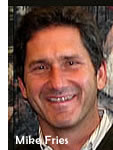
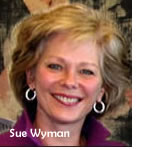 and business people. The first was Gene Schneider, really one of the pioneers in the cable industry – just a fantastic individual. A great leader of men but more than anything has great integrity. And of course, John Malone, our current chairman, and I don’t think you could have a better partner or individual to be working with, who is far-and-away one of the smartest business people I’ve ever come across. But on top of that is a great human being, a really nice individual, loyal and generous and really loves and is excited by this business. It’s kind of TCI-2. So I’ve been lucky to work for some really great individuals. Sue Wyman and Larry did some more probing.